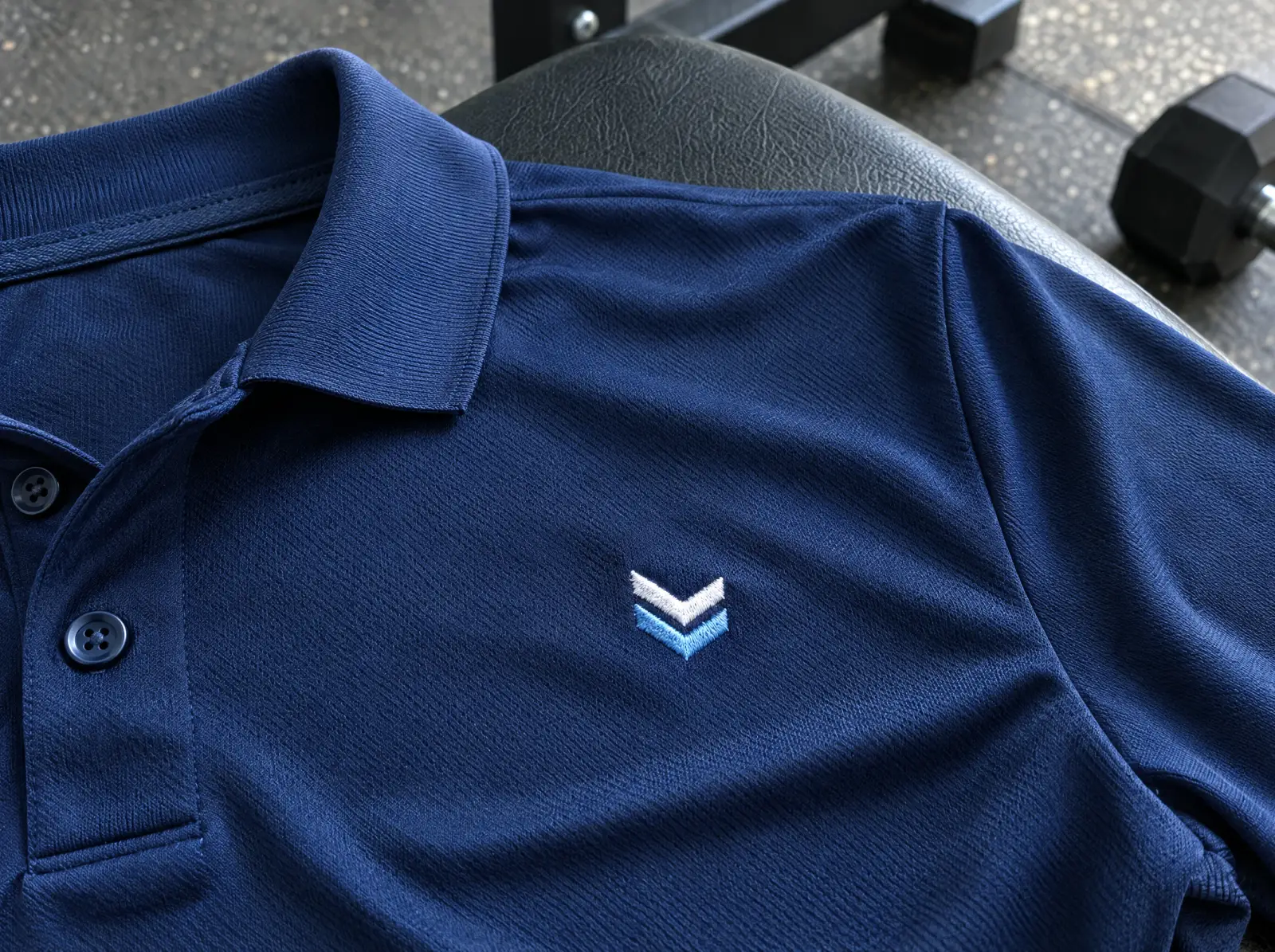
Why is embroidery on performance fabric so prone to puckering?
Madeira describes polyester performance fabric as stretchy, slippery and very unstable, and a challenge to hoop. Each property causes its own problem:
- Stretch: stitches pull the knit in, so fills pucker and shapes shrink away from their outlines.
- Slipperiness: the fabric creeps in the hoop while the design sews, which throws outlines out of register.
- Thinness: there is little body to hide the stabilizer or absorb a heavy design, so dense logos look like a stiff badge stuck on the shirt.
Groz-Beckert, the needle maker, names three factors in puckering: stitch density (the more stitches, the stronger the puckering), thread size and thread tension. It notes that needle size hardly affects it. All three are worth checking before blaming the fabric. The general diagnosis is in why embroidery puckers; this page covers what is specific to performance knits.
How should a design be digitized for performance fabric?
Madeira gives three design rules for performance wear, and they match what digitizers do:
- Choose lighter designs. Lower fill density and fewer stacked layers. See stitch density for what too dense looks like.
- Increase underlay and reduce fill area. Underlay locks the knit to the backing before the top stitches pull on it. Large solid fills can often be opened up or turned into outlined shapes.
- Watch push and pull compensation. A stretch knit draws in more than a woven, so shapes need more pull compensation to meet their outlines.
Sequencing helps too: sewing from the center outward and finishing one area before moving on keeps the fabric from being pulled in several directions at once. Small lettering needs care, as Groz-Beckert notes that very fine lettering on knitted fabric is difficult. For names and numbers on jerseys, see the team sportswear digitizing service.
Which backing and hooping work on performance fabric?
| Item | Recommendation | Why |
|---|---|---|
| Backing | Thin, strong cut-away made for performance wear (no-show mesh or woven cut-away) | Madeira says low-profile backings avoid the badge effect of heavy or stacked backing on thin garments |
| Backing layers | One layer for lighter designs, two for heavier ones | Madeira: one layer of its performance backing for designs up to 7,000 stitches, two above that |
| Extra support | A light tear-away under the cut-away | Madeira suggests it for a firmer foundation while sewing |
| Topping | Water-soluble, on textured performance pique | Madeira: keeps stitches from sinking into the texture |
| Adhesive | Temporary spray on the backing only | Helps slippery fabric stay put; Madeira says never spray the garment |
Melco adds that a lightweight woven stabilizer on stretchy athletic wear prevents a visible halo around the design on the front of the garment. When hooping, hold the fabric flat and snug without stretching it: stretched fabric relaxes when unhooped and puckers around the design. Use the smallest hoop that fits. Madeira is candid that perfecting the hooping on performance wear takes time, patience and practice, so hoop a few spare garments before a big order.
After sewing, trim the cut-away carefully: Madeira suggests holding the backing while trimming, letting the garment drape, and leaving about 1/4 to 1/2 inch around the design so the edge of the backing does not show through the thin fabric.
What needle and thread should you use?
- Ballpoint needle. Groz-Beckert says ball points are required on knits to avoid damaging the fabric, recommending its RG or FFG point for delicate knits and the FG point for coarser ones. Madeira also lists knits and golf shirts for ballpoint needles.
- Fine size. Groz-Beckert lists a needle that is too thick as a cause of holes in knits, because it stretches the loops until they burst. Use the smallest size that suits the thread.
- Thread. Madeira notes that softer, more pliable threads fight less with the fabric and lie flatter, and that polyester threads suit performance wear for their bleach resistance and colorfastness to sunlight.
- Tension. Keep top tension no tighter than needed; high tension draws the fabric together, especially under long satin stitches.
How do you check a design before sewing it on performance wear?
Stitch count is the quickest signal. A logo with a high count for its size is dense, and on a thin knit that means puckering. Our stitch count estimator gives a typical count for a design of a given size, so you can compare it with the file you have. If the file was built for a heavy fabric, it needs a lighter version rather than a different backing.
Related fabrics: embroidery on fleece is also a knit but adds a nap, and embroidery on denim is the stable opposite. Hi-vis garments are thin polyester too, with their own rules around reflective tape, covered on our hi-vis digitizing page. All fabrics are compared in the embroidery by fabric guide.
Rather have it digitized for you?
Hand-digitized files from $10 per design, back in 4–8 hours, in every machine format.
Get a free quote →Frequently asked questions
Sources
- Madeira USA: E-Zee Guide to choosing backings (performance wear section)
- Madeira USA: Professor T.H. Read, choosing the correct needle
- Groz-Beckert: machine needles for single and multihead embroidery (knits, puckering)
- Melco: selecting stabilizer and backing for embroidery
Sources checked 19 September 2026.