New clients: First design digitised free — no conditions. Claim it →
🌈 Instant Thread Coloring Technology

Coloreel Embroidery
Digitizing Gradients,
Unlimited Colour

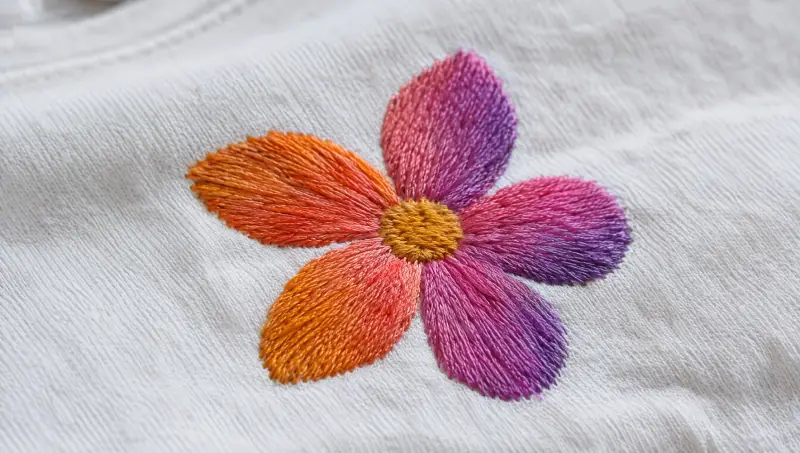
Coloreel is a Swedish embroidery technology that dyes a single white thread in real-time as it stitches, enabling seamless gradients, Pantone-accurate colours, and photorealistic effects that standard embroidery cannot produce. Digitizing for Coloreel requires specific expertise. PlixaLabs provides it.

We deliver two files for every Coloreel order, the DST stitch file for your embroidery machine and the CSE colour file for Coloreel Studio. Both are planned together from the start, with CCP-robust designs that perform consistently regardless of thread tension or machine speed variation.

DST + CSE file delivery
CCP-robust designs
Pantone / HEX / RGB matching
Unlimited revisions
🏢 Co. No. 15975548
💷 VAT GB 506 4612 12
⚡ 4–8hr turnaround
🔄 Unlimited revisions
🇸🇪 Coloreel technology
✦ Coloreel specialist digitising
DST + CSE files — delivered today
CCP-robust stitch planning from the ground up
From £20 per design
DST file for your embroidery machine
CSE file for Coloreel Studio
CCP MIN/MAX tested before delivery
Pantone / HEX / RGB colour matching
Seamless gradients and smooth transitions
Unlimited free revisions included
🧵 Compatible with any machine that accepts DST files. Works with Tajima DG and Pulse ID software natively.
Get Your Coloreel Quote →

No minimum order · No subscription · Pay per design

£20
Starting from
4–8h
Turnaround
Colour combinations
2
Files delivered (DST+CSE)
24/7
Always open
What is Coloreel?

The technology that changed what embroidery can do

Coloreel is a Swedish technology company that developed the world's first Instant Thread Coloring Unit, the ITCU. The unit attaches to any standard industrial embroidery machine and sits between the thread reel and the needle. It does something no embroidery technology has done before: it dyes a single white thread in real-time, exactly as each stitch is made.

Traditional embroidery is constrained by pre-dyed thread. If you want five colours in a design, you need five thread changes. If you want a gradient that fades from navy to coral, you cannot achieve it, not cleanly, not without visible steps. The only way to approximate gradients in standard embroidery is to layer stitches in different directions, which adds bulk, weight, and production time.

Coloreel eliminates all of this. The ITCU can shift from any colour to any other colour, or blend between them gradually, without stopping the machine, without changing thread, without any physical intervention. One white thread. Unlimited colour. Seamless gradients. No thread changes.

Coloreel uses standard DST stitch files for the embroidery machine, combined with a CSE colour file that runs in Coloreel Studio software on the ITCU. This means Coloreel works with any digitizing software that exports DST, but the stitch file must be planned specifically for Coloreel's colour capabilities to get the best results. That is where PlixaLabs comes in.

How the ITCU works

The Coloreel Instant Thread Coloring Unit follows this sequence on every stitch.

01
White thread feeds through the ITCU
The ITCU uses a single reel of white recycled polyester thread, the same thread for every colour in the design. The thread feeds through the unit before reaching the needle.
02
The unit dyes the thread in real-time
Using a process similar to inkjet printing, the ITCU applies dye to the white thread as it moves through, applying exactly the right colour at exactly the right moment, based on the CSE colour file running in Coloreel Studio.
03
Colour is fixed instantly
The dye is fixed to the thread immediately after application, before the thread reaches the needle. The colour is wash-resistant and durable from the moment it is applied.
04
The coloured thread stitches the design
The freshly coloured thread passes through the needle and into the fabric in real-time. Because the colour is applied continuously as the machine runs, gradients and transitions happen exactly where the CSE file specifies them, stitch by stitch.
05
No thread changes. No stops. No trims.
Because every colour comes from the same white thread, the machine never stops for thread changes. Production speed is significantly higher than multi-thread embroidery, particularly for designs with many colour transitions.
The Honest Comparison

What Coloreel enables that traditional embroidery cannot

Traditional embroidery has served the industry well for decades. But it has hard limits that Coloreel removes entirely. Here is exactly what changes.

🧵 Traditional multi-thread embroidery
  • Limited to pre-dyed thread colours. You can only use colours that exist as physical thread reels in your inventory. Exact Pantone matches are approximate at best.
  • Thread change required for every colour. A design with 8 colours requires 8 thread changes. Each one stops the machine, costs time, and creates a trim on the back of the garment.
  • No seamless gradients. Gradients in traditional embroidery are simulated by layering stitches at different angles, a technique that adds bulk and still produces visible colour steps rather than smooth transitions.
  • Large thread inventory required. A commercial embroidery business needs hundreds of thread reels in different colours to serve diverse client requirements. Storage, management, and reordering are ongoing costs.
  • Higher material waste. Thread left on spools after a production run, unused reels for discontinued colours, and trims from thread changes all contribute to ongoing material waste.
🌈 Coloreel ITCU technology
  • Exact Pantone, HEX, and RGB colour matching. The Coloreel system can reproduce millions of distinct colours. Specify your exact brand colour codes and the CSE file maps to them precisely.
  • Zero thread changes — ever. One white thread handles every colour in the design. The machine runs continuously from start to finish, regardless of how many colour transitions occur in the design.
  • True seamless gradients. Because the ITCU dyes the thread stitch-by-stitch, colour transitions are genuinely continuous, not approximated. A design can fade from deep navy to pale gold across hundreds of stitches without a single visible step.
  • Single thread reel per head. One reel of white thread replaces the entire thread inventory for multi-colour production runs. Storage requirements, inventory management costs, and reorder cycles are dramatically reduced.
  • Significantly less waste. Only the thread that is actually stitched is coloured. No unused coloured thread is discarded. Water consumption in the dyeing process is also substantially lower than traditional pre-dyeing methods.
Specialist Expertise Required

Digitizing for Coloreel is fundamentally different

You cannot simply take a standard embroidery file and run it on a Coloreel machine and expect good results. Coloreel digitizing requires specific knowledge that most digitisers do not have. Here is what changes.

📐
Stitch direction planning for gradients
In standard embroidery, stitch direction primarily affects the sheen of the finished design. In Coloreel digitizing, stitch direction directly controls how gradients flow across the design. A fill area stitched in the wrong direction will produce a gradient that runs perpendicular to the intended direction, or at an angle you did not plan. Entry and exit points of each fill area must be planned with the gradient direction in mind from the start.
Coloreel-specific
⚖️
CCP — Color Change Precision management
CCP is one of the most technically demanding aspects of Coloreel digitizing. Because the ITCU dyes the thread slightly before it is stitched, the exact stitch at which a colour transition appears on the fabric varies depending on thread consumption, which varies with stitch density, thread tension, and machine speed. A CCP-robust design accounts for this variation, using Coloreel Studio's CCP MIN and CCP MAX visual tools to ensure the colour transition looks correct across a defined range of thread consumption variation. PlixaLabs tests CCP MIN and CCP MAX on every Coloreel file before delivery.
Coloreel-specific
🔗
Minimising jumps and trims
Standard embroidery uses jump stitches to travel between design elements, followed by trims that are cut from the back of the garment. In Coloreel, every trim creates a break in the thread, which means the colour that was being applied when the machine stopped must restart cleanly when stitching resumes. Coloreel designs should be planned to connect elements with the closest possible path, minimising jump stitches and keeping trims to an absolute minimum. This requires a different approach to stitch sequencing than standard embroidery.
Coloreel-specific
🎨
Two-file workflow — DST + CSE
Every Coloreel order requires two separate files that work together. The DST stitch file controls what the embroidery machine does, stitch paths, density, underlay, sequencing. The CSE colour file, created in Coloreel Studio, controls what the ITCU does, when to change colour, how fast to transition, and the exact colour values at each point in the design. These two files must be created in coordination. A PlixaLabs Coloreel file is not a standard digitizing file with colours added later. It is designed as a Coloreel project from the first stitch decision.
Coloreel-specific
🌊
Gradient construction techniques
Coloreel supports several gradient construction methods, linear gradients that flow in one direction, radial gradients that emanate from a centre point, noise effects that create textured colour variation across a fill area, and stripe effects that alternate between defined colours. Each method requires different stitch planning. A linear gradient requires consistent stitch direction across the entire fill. A noise effect requires specific stitch density settings that allow the random colour variation to be visible without appearing harsh. PlixaLabs has experience with all Coloreel gradient types.
Coloreel-specific
🔢
Multi-thread Coloreel setups
Advanced Coloreel setups use multiple ITCU units on a multi-head machine, one per needle position. This allows different design elements to receive different colour treatments simultaneously, significantly increasing complexity and creative possibilities. Digitizing for multi-thread Coloreel requires planning which elements are assigned to which ITCU, how thread consumption is balanced across heads, and how CCP is managed across multiple simultaneous colour programmes. PlixaLabs supports both single-thread and multi-thread Coloreel configurations.
Advanced Coloreel
What Coloreel Can Produce

Effects that standard embroidery cannot achieve

Every effect below is impossible or impractical with traditional multi-thread embroidery. With Coloreel digitizing from PlixaLabs, they become standard production outputs.

Linear Gradient
Linear Gradient
A smooth, continuous colour transition flowing in a single direction across a fill area. From any colour to any other colour, over any distance, with no visible steps or breaks.
Multi-Colour Gradient
Multi-Stop Gradient
A gradient that passes through three or more defined colours, for example, green to blue to purple to red, in a single continuous flow without the machine stopping once.
Radial Gradient
Radial Gradient
A gradient that radiates outward from a centre point, or inward toward one, creating circular colour transitions, halo effects, and spotlight-style colouring on logo elements.
Shadow & Depth
Shadow and Depth Effect
Dark-to-light transitions that simulate lighting and shadow on three-dimensional logo elements, giving flat embroidery a sense of depth and dimension that has never been achievable before.
Noise / Texture
Noise and Texture Effects
Coloureel's noise effect introduces controlled randomness into the colour across a fill area, producing textured, dithered, or granulated colour patterns that give embroidery an artisanal, hand-crafted quality.
Stripe Effect
Stripe and Pattern Effects
Alternating stripes of defined colours, horizontal, vertical, or diagonal, produced within a single fill area without separate elements, separate stitch runs, or any manual thread changes during production.
Who Uses Coloreel

The industries where Coloreel changes everything

Coloreel is not the right technology for every embroidery order. Here are the specific applications where it delivers results that no alternative approach can match.

👗
Fashion and Luxury Apparel
Fashion designers and luxury apparel brands use Coloreel to produce embroidered pieces that were previously only achievable through hand embroidery, intricate gradient florals, ombre lettering, and photorealistic motifs that blend colour across the entire design without a single visible thread change. Coloreel enables embroidery to compete aesthetically with digital printing while retaining the tactile quality and durability that print cannot match.
🏆
Premium Corporate Branding
Corporate clients who require exact Pantone colour matching across embroidered uniform programmes benefit enormously from Coloreel's ability to reproduce specific colour values precisely. A brand that uses PMS 285 as its primary colour can receive embroidered garments where that specific shade is reproduced exactly, not approximated from the nearest available thread reel. This level of colour accuracy was impossible in standard embroidery.
Sports and Teamwear
Sports team kit with gradient name bars, ombre number arcs, and multi-colour club badges that transition smoothly between team colours are now achievable in a single production run without thread changes. For sports apparel producers who run high volumes of personalised names and numbers, Coloreel's elimination of thread changes between colour variants dramatically reduces setup time and increases throughput.
🎨
Creative and Artistic Embroidery
Embroidery artists and studios using Coloreel can achieve effects that were previously only possible through hours of manual hand work. Photorealistic portraits with gradual skin tone transitions, landscape designs with sky-to-horizon colour fades, and abstract art pieces with complex colour blending are all achievable at commercial machine production speeds with the right digitizing.
🎁
Premium Promotional Products
Promotional product suppliers who want to offer clients something genuinely different from the standard embroidered polo can use Coloreel to produce gradient logos, rainbow-effect branded merchandise, and unique colour treatments that stand out in a competitive market. A promotional product with a Coloreel gradient logo is visually distinct from anything a competitor can produce through standard embroidery.
🏥
Healthcare and Wellbeing Brands
Healthcare brands, wellness companies, and mental health charities that use gradient or multi-colour visual identities can now reproduce those identities accurately in embroidery for the first time. A rainbow pride flag embroidered without Coloreel requires seven separate thread changes and visible colour steps. With Coloreel, it is a single continuous run with seamless transitions between every colour.
How We Work

The PlixaLabs Coloreel workflow

Our Coloreel workflow is different from standard digitizing because the colour decisions must be made alongside the stitch decisions, not after. Here is exactly how we approach every Coloreel project.

1
Brief and colour planning
You send your artwork, your colour requirements (Pantone, HEX, RGB, or description), and your intended application. We establish the gradient or colour effect plan before touching a stitch tool.
2
Stitch path planning for Coloreel
We plan the DST stitch file with Coloreel in mind from the first stitch. Direction, entry points, exit points, and element sequencing are all determined by the gradient plan, not by standard embroidery convention.
3
CSE colour file creation
Working in Coloreel Studio, we build the CSE colour file alongside the DST, mapping each gradient, transition, and solid colour segment to the exact stitch positions in the design.
4
CCP testing
We test CCP MIN and CCP MAX on every design before delivery. This confirms that colour transitions will appear in the correct position across the expected range of thread consumption variation in production.
5
Delivery and revisions
You receive both files, the DST for your machine and the CSE for Coloreel Studio, along with a colour reference PDF. Unlimited revisions until every gradient and transition is exactly right.
Pricing

Coloreel digitizing pricing — honest and transparent

Coloreel digitizing is more expensive than standard embroidery digitizing because it requires significantly more planning, two separate files, and CCP testing. Every price includes unlimited revisions.

Simple
£20
per design
Single gradient or solid colour Coloreel design. Clean shapes, straightforward colour plan.
Simple logo with one linear gradient. Brand wordmark with ombre effect.
Order Now
Complex
£45+
per design
Photorealistic effects, complex multi-gradient designs, multi-thread ITCU setups.
Photorealistic portraits. Full artistic gradient compositions. Multi-ITCU designs.
Get Quote
Rush
+50%
on base price
Priority queue — delivered in 2 to 4 hours. Available 24/7.
Add to any Coloreel order when your production cannot wait.
Add Rush
All prices in GBP. Includes DST + CSE file delivery, CCP testing, colour reference PDF, and unlimited revisions. VAT invoices for UK B2B orders.
🧵
Also need standard embroidery digitizing?
PlixaLabs offers the full range of standard embroidery digitizing services alongside Coloreel, logo digitizing, cap digitizing, 3D puff, jacket back, patch, and appliqué. Same studio, same quality standard, same turnaround commitment.
Standard Digitizing Services →
FAQs

Coloreel questions — answered properly

These are the questions that experienced Coloreel users ask. We answer them directly.

Coloreel digitizing creates two files, a standard DST embroidery file and a CSE colour file for Coloreel Studio. The DST file controls stitch paths as normal, and the CSE file tells the Coloreel ITCU exactly when and how to dye the white thread as it feeds through the machine. Digitizing for Coloreel requires specific knowledge of stitch direction planning, entry and exit point management, CCP (Color Change Precision) handling, and gradient construction techniques that differ significantly from standard embroidery digitizing.
We deliver a DST file for your embroidery machine and a CSE file for Coloreel Studio. Both files are designed to work together, the stitch paths in the DST are planned specifically to support the colour transitions defined in the CSE. We also deliver a PDF colour reference showing your gradient plan, colour values, and transition points. All file types are included in the base price.
CCP stands for Color Change Precision. Because the ITCU dyes the thread slightly before it is stitched, the exact stitch at which a colour transition appears on the fabric varies depending on thread consumption, which is affected by stitch density, thread tension, and machine speed. A CCP-robust design accounts for this variation, using Coloreel Studio's CCP MIN and CCP MAX visual tools to verify the design looks correct across the expected range of thread consumption variation. PlixaLabs runs CCP MIN and CCP MAX checks on every Coloreel file before delivery.
The Coloreel ITCU attaches to most modern single-head and multi-head industrial embroidery machines. It accepts DST files, so any machine that runs DST embroidery files is compatible. Coloreel is also fully integrated with Tajima DG and Pulse ID software for users of those platforms. The ITCU sits between the thread reel and the needle on the machine head, no modification to the machine itself is required.
Coloreel digitizing starts from £20 per design for simple single-gradient designs. Medium complexity designs with multi-stop gradients or noise effects are £30. Complex photorealistic or multi-ITCU designs are £45 and above, priced individually. Rush orders carry a 50% surcharge. Coloreel digitizing is priced higher than standard embroidery digitizing because it requires significantly more planning, two separate files (DST and CSE), and CCP testing before delivery.
Yes. The Coloreel system can reproduce millions of distinct colours including exact Pantone, CMYK, HEX, and RGB values. When providing your brief, share your specific colour codes and we map the CSE file to those exact colour values. This makes Coloreel particularly valuable for corporate branding work where precise colour consistency across garments is essential and the nearest-available thread approximation that standard embroidery requires is not acceptable.
You can run a standard DST file through a Coloreel machine, the machine will accept it. However, the results will not take full advantage of Coloreel's capabilities and may not look as intended. Standard DST files are not planned with Coloreel's gradient flow, stitch direction requirements, or CCP management in mind. To get the most from your Coloreel investment, your DST files should be created specifically for Coloreel from the start, which is what PlixaLabs provides.
Standard Coloreel orders are delivered within 4 to 8 hours. Complex photorealistic or multi-ITCU designs may take up to 12 hours. Rush orders (2 to 4 hours) are available for an additional 50% surcharge. We operate 24 hours a day, 7 days a week, so orders placed in the evening are delivered overnight and ready before the next working morning.

Ready to unlock unlimited colour in your embroidery?

Send us your design, your colour requirements, and your Coloreel machine details. We deliver both files, DST and CSE, with CCP testing included, in 4 to 8 hours.

DST + CSE file delivery — both files planned together from the start
CCP MIN and CCP MAX tested before every delivery
Exact Pantone, HEX, and RGB colour matching
Unlimited free revisions — no time limit, no hidden charges
UK registered company — VAT invoice on every B2B order
Gradients, noise effects, stripes, radial effects — all supported
1
Send your artwork and colour brief
Your logo or artwork in any format. Your colour requirements, Pantone, HEX, RGB, or description. Your intended gradient or colour effect.
2
Tell us your machine and Coloreel setup
Machine brand and model. Single or multi-head. Single or multi-ITCU. This determines how we plan the stitch sequencing.
3
Receive DST + CSE files — 4 to 8 hours
Both files planned together. CCP tested. Colour reference PDF included. Unlimited revisions until every gradient is exactly right.
4
Load, run, and see the difference
DST to your machine. CSE to Coloreel Studio. Run. Watch gradients and unlimited colour come to life in embroidery for the first time.
Get Your Coloreel Quote →

No minimum order · No subscription · Unlimited revisions included