How is chenille embroidery made?
A standard embroidery machine locks each stitch with a bobbin thread under the fabric. A chenille machine works differently. Wilcom's chenille guide describes needles that have a hook instead of an eye, with the yarn pulled up one loop at a time by a looper housed below the needle plate. Wilcom's software help adds that chenille machines use no bobbin thread.
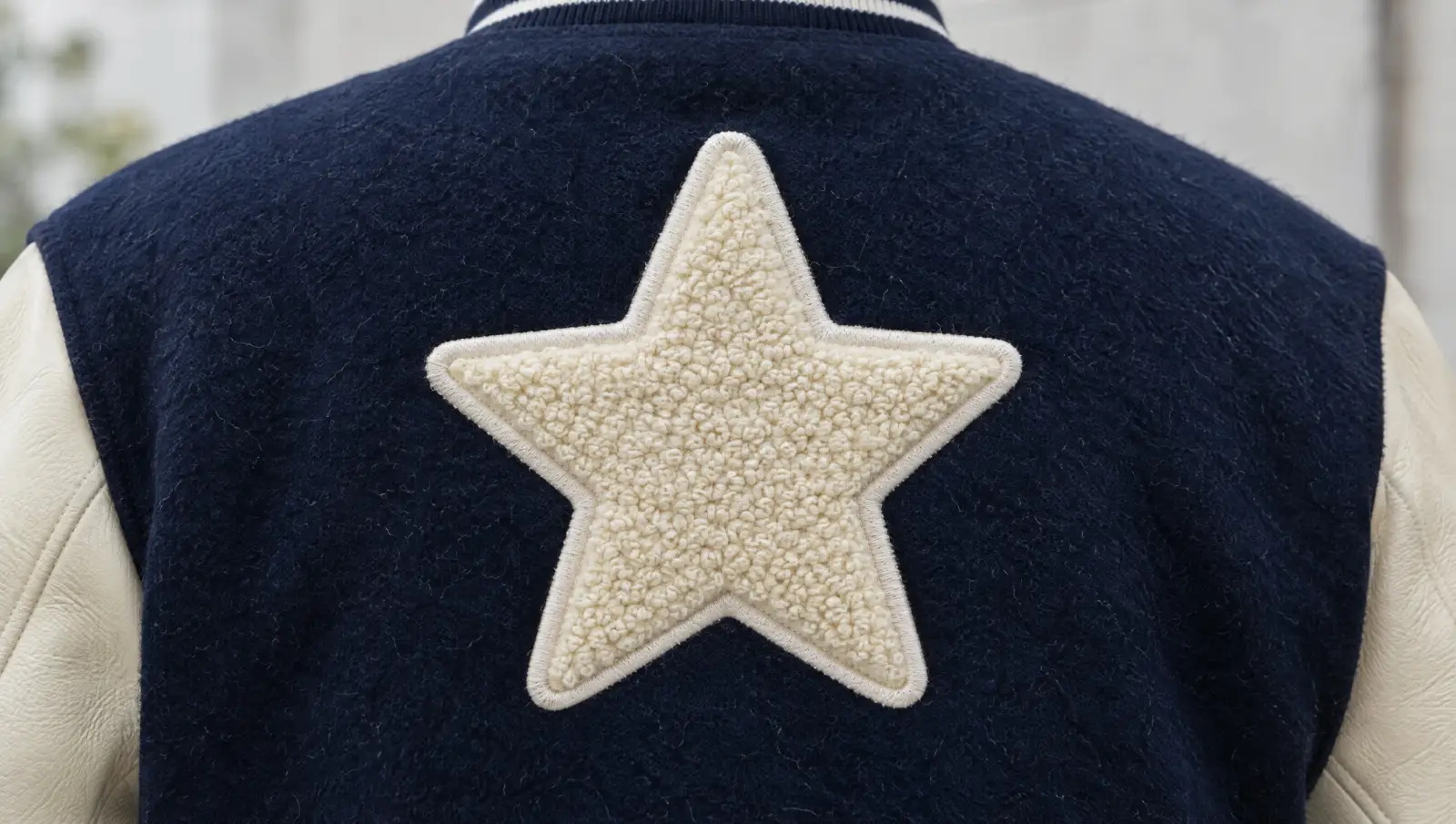
From that one mechanism the machine makes two stitches. Tajima describes them as the loop stitch, made by pulling up the thread with a crochet hook, and the chain stitch, finished in a chain shape. The loop stitch is what embroiderers call moss.
Chenille yarn is much thicker than embroidery thread. Wilcom notes that chenille works best at larger sizes because of the yarn thickness, and that several strands of yarn can be used for different looks and textures.
What is the difference between moss stitch and chain stitch?
| Moss (loop) stitch | Chain stitch | |
|---|---|---|
| What it looks like | A raised pile of loops | A flat line like the links of a chain |
| Used for | Filling letters, numbers and large shapes | Outlines, borders, monograms and fine detail; can also fill |
| Needle height | Variable: lower for outlines, higher for fill areas | Adjusted to the chain size |
| Fill patterns (Wilcom) | Square and Coil | Chain can also be used as a fill |
| Durability | Can loosen in washing without a tie-off | Often used as a border that ties the moss in |
Wilcom's help explains that moss stitch can loosen during washing, so chain borders are used to give it a tie-in and tie-off. Tajima builds the same idea into its machines: a tie-off function adds several chain stitches automatically after loop stitching to prevent fraying. Chenille designs also tend to build in height from the edges to the middle, in Wilcom's words.
What machines sew chenille embroidery?
Chenille needs a chenille machine or chenille heads. A flat embroidery machine cannot form moss loops. Two machine makers publish these details:
- Tajima TCMX series: the TCMX comes as a mixed type that pairs chenille heads with standard embroidery heads (up to 15 pairs), a TCMX-600 type with up to 23 chenille heads for volume work, and the single-head TCMX-601. Needle height adjusts automatically for loop height and chain size, and colors change automatically across 6 colors.
- Barudan chenille machines: Barudan America lists high-speed changeover between loop and chain, automatic needle bar height control across 10 height levels for different loop heights, automatic color change in 6 colors and a 450 x 800 mm sewing field.
Combination machines matter because many chenille jobs also need flat embroidery, for example a stitched name under a chenille letter. Chenille machines also read their own file: Wilcom lists T01 as the format for chenille-enabled Tajima machines, so check your machine's format in our guide to embroidery machines and formats.
Why is chenille sewn on felt?
Wilcom notes that the backing for chenille is usually felt, which is softer than regular embroidery backing. That is why varsity letters are usually built on felt, often with a margin of felt left showing around the chenille as a border.
There is a second production method. Chenille can also be backed with a sticky fabric and applied with heat and a press, and Wilcom notes that with this method the moss fill does not need a chain border.
The felt is part of the design, not only a base. It shows around the letter and in any gaps between moss areas, so choose the felt colors together with the yarn colors and tell your digitizer about them. Letters and patches built this way are covered in chenille letters and patches.
Where is chenille embroidery used?
- Varsity letters and letterman jackets: the classic use, with moss letters on felt and chain outlines.
- Sports and school apparel: Wilcom notes chenille is often combined with regular embroidery on sports and woolen jackets, and is frequently used for sweatshirt emblems.
- Clubs and fashion: Barudan America describes chenille spreading from sporting goods into riding clubs, intramural clubs and alumni organizations.
Because the yarn is thick, chenille suits bold shapes. When you plan a job, fix the finished letter height and the felt colors first: the loop height, the fill path and the split between moss and chain are all planned for that size. Small text and fine detail belong in chain stitch or in flat embroidery. For the other raised and decorative techniques, see our specialty embroidery guides, including sequin embroidery. When you have a design ready, our chenille digitizing service plans the moss and chain areas by hand, and the free image to embroidery checker tells you whether your artwork is sharp enough to start from.
Rather have it digitized for you?
Hand-digitized files from $10 per design, back in 4–8 hours, in every machine format.
Get a free quote →Frequently asked questions
Sources
- Tajima: TCMX chenille embroidery machine
- Barudan America: chenille machines
- Wilcom: traditional chenille embroidery
- Wilcom EmbroideryStudio help: chenille stitch types
- Wilcom: Tajima machine formats (T01 for chenille)
Sources checked 19 September 2026.